Elica and the Fondazione Ermanno Casoli present Esseri a malapena immaginabili, a site-specific artwork by Numero Cromatico, curated by Marcello Smarrelli.
Elica and the Fondazione Ermanno Casoli present, at the company’s headquarters in Fabriano, Esseri a malapena immaginabili, a site-specific artwork created by Numero Cromatico together with Elica’s people: a new work of art that becomes part of the collection developed through E-straordinario, the training project curated by Marcello Smarrelli for the Ermanno Casoli Foundation, which for more than twenty years has brought contemporary art into companies as a tool for growth and innovation.
The artwork was created for Elica’s corporate spaces, which over the years have become a contemporary art museum open to visitors by appointment.
Francesco Casoli, Chairman of Elica: “For those who are part of Elica, art has always been much more than a travelling companion: over time it has become a common language, an attitude, a way of observing and interpreting reality. In this sense, the Ermanno Casoli Foundation is not only a cultural outpost directed outward, but also a silent engine that continues to nurture from within our ability to innovate, take risks, and imagine the future. The business world thrives on processes, governance, and measurement, but it equally needs spaces for exploration, cross-pollination, and that ‘creative chaos’ capable of generating new perspectives. These are not contradictory dimensions but complementary forces, and it is within the productive tension between these two poles that we exercise the extraordinariness that distinguishes us.”
Deborah Carè, Chief Human Resources Officer at Elica: “Artists spark deep reflection, imagination, and new scenarios. Within a company, this helps people view problems and opportunities from unexpected perspectives, strengthening both problem-solving and creativity. The work carried out over the years by the Ermanno Casoli Foundation has brought cultural awareness, attention to people, critical engagement with the present, and openness to change into Elica, fostering a dynamic corporate culture capable of interpreting complexity and transformation.”
Numero Cromatico is a collective founded in Rome in 2011, composed of researchers from the fields of visual arts, neuroscience, psychology, philosophy, and design. It operates at the intersection of artistic experimentation and scientific research, adopting a transdisciplinary approach focused on perception, language, aesthetic experience, and the role of the viewer.
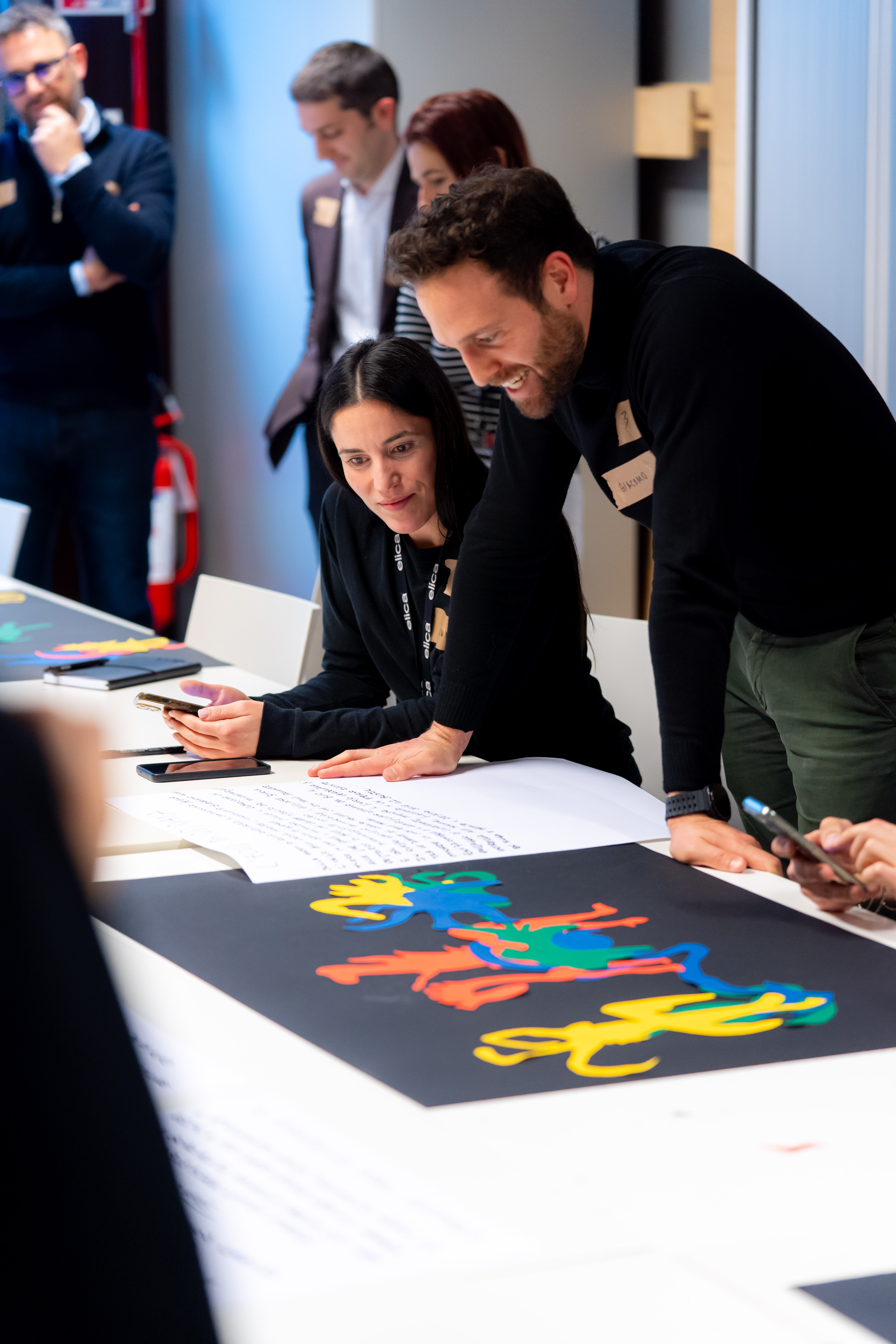
Esseri a malapena immaginabili is the result of a project developed from the content that emerged during a workshop led by the collective with members of the Elica Group, held on 3 and 4 March 2026 at Elica’s headquarters in Fabriano. The programme involved 18 participants, including managers and employees, in a creative exploration designed to connect Fabriano’s historical heritage with contemporary art and the new frontiers of Artificial Intelligence.
The two-day programme alternated theoretical and practical sessions, introduced by a talk open to all company employees, featuring Numero Cromatico and Marcello Smarrelli discussing the collective’s research themes. Of particular significance was the lecture by Alessandro Delpriori, professor at the University of Camerino, dedicated to iconology and medieval bestiaries as pedagogical and moral devices essential for understanding the relationship between Human Beings, Nature, and Knowledge. Starting from the medieval tradition of watermarks and bestiaries—tools capable of transforming signs into vessels of values and narratives—participants developed both personal and shared symbolic imaginaries, giving life to a bestiary of “barely imaginable beings”.
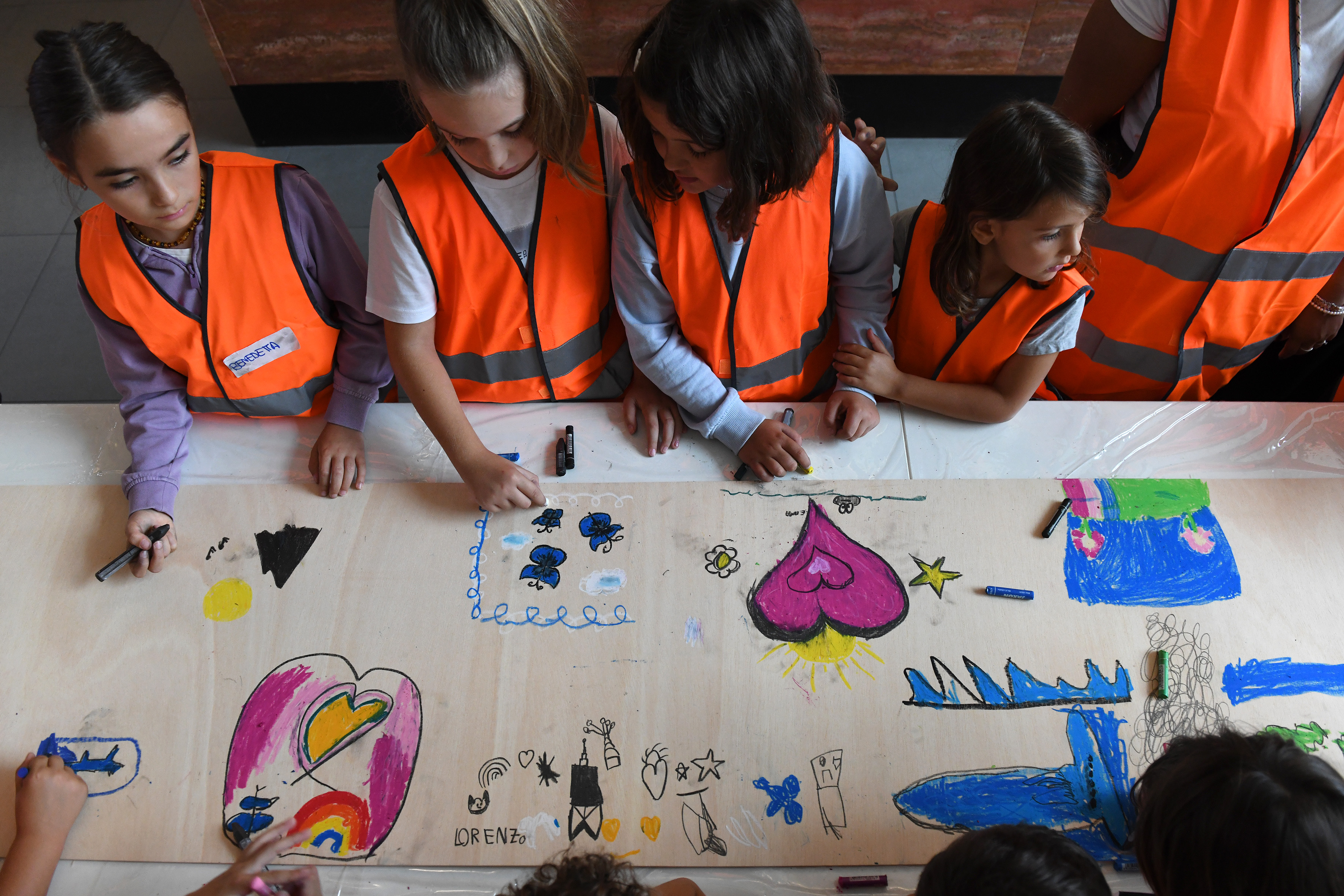
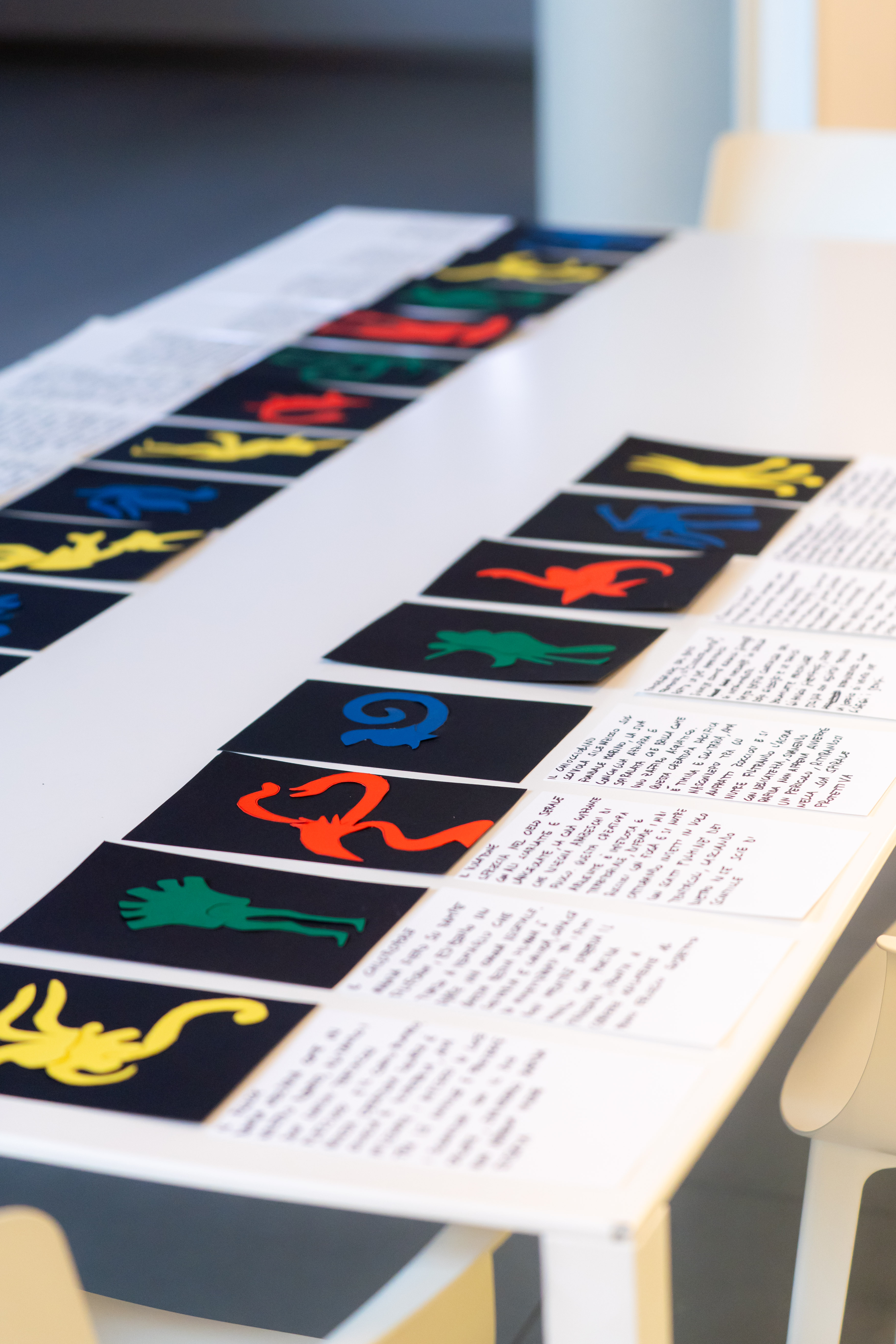
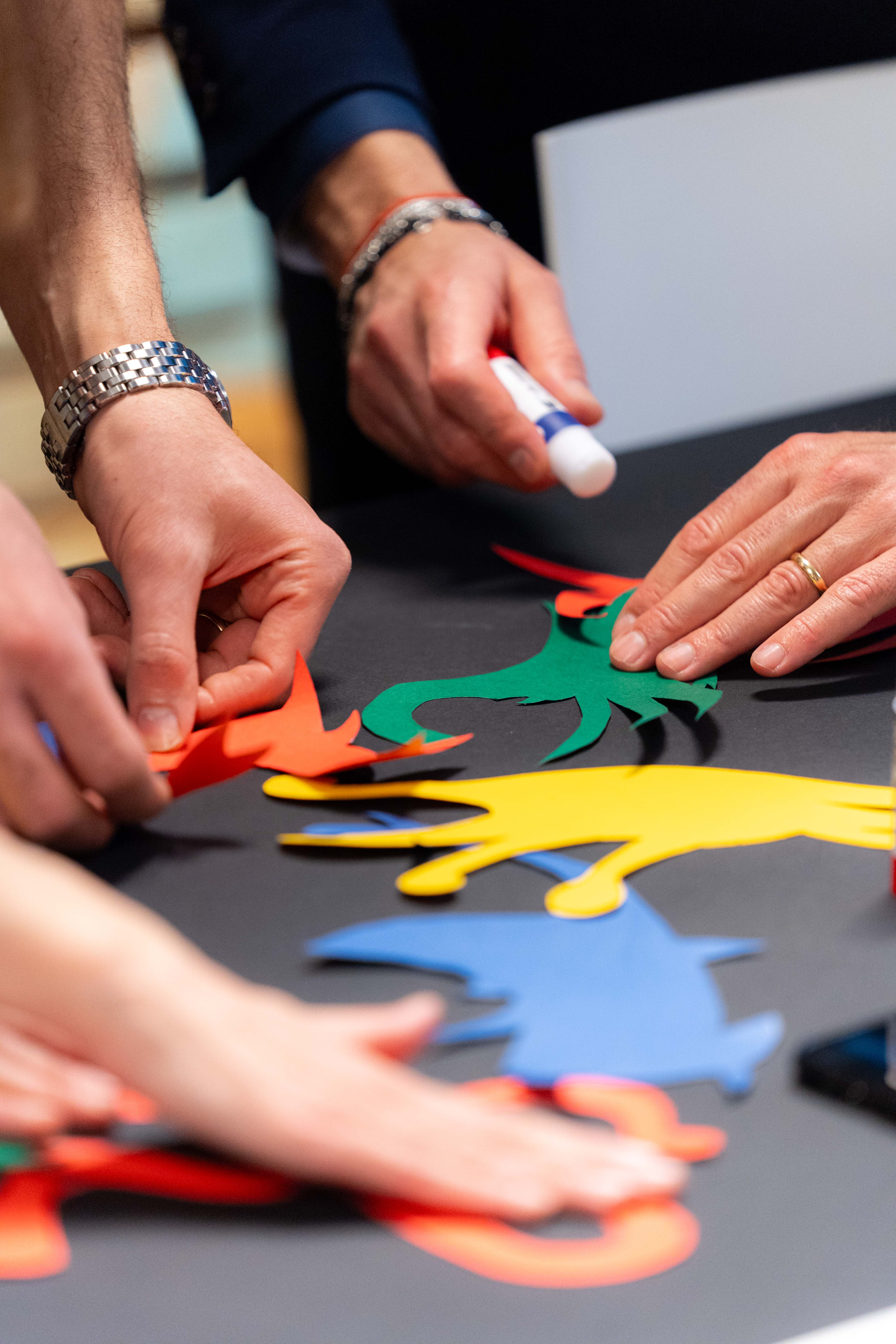
The workshop unfolded in an initial hands-on phase based on drawing and collage to design hybrid creatures, followed by the use of Artificial Intelligence as a speculative tool: not to generate images, but to analyse symbols and produce texts and new connections of meaning. The bestiary thus evolved into a collective ecosystem, presented in an exhibition within the company spaces at the end of the programme.
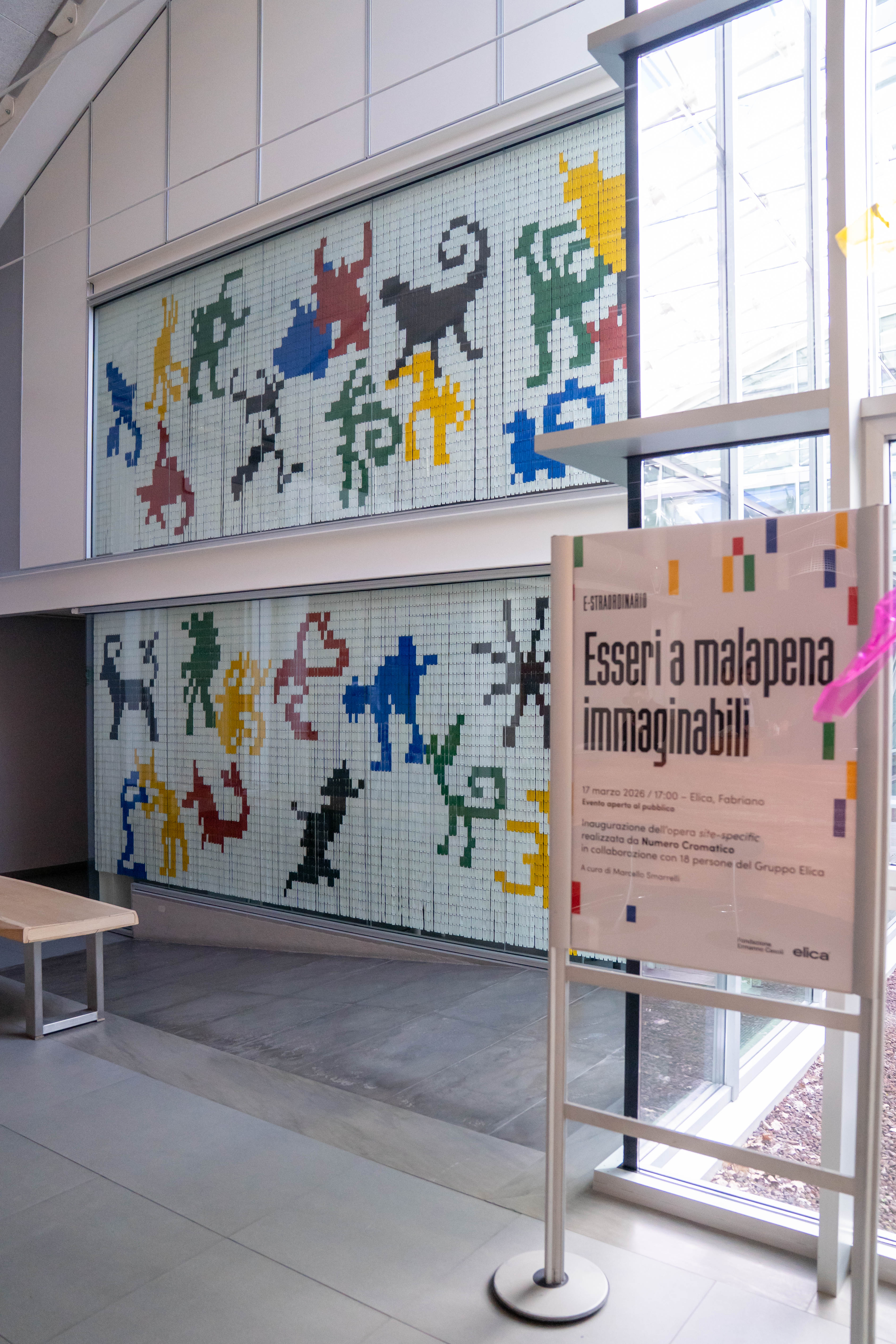
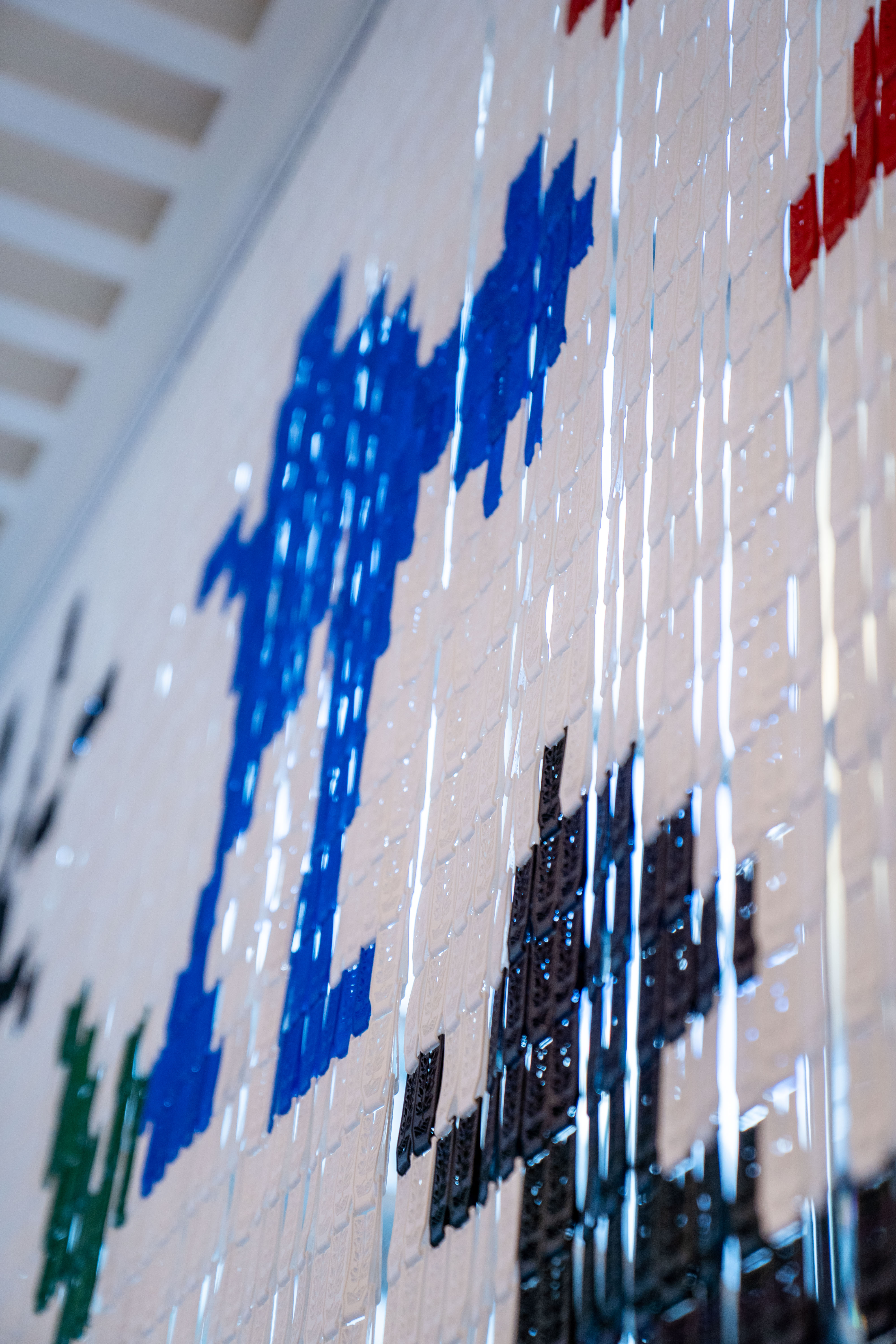
Esseri a malapena immaginabili is a large tent-like structure composed of thousands of small tiles, presenting a permanent symbolic bestiary that synthesises the creativity that emerged during the workshop.
The title of the artwork references The Book of Barely Imagined Beings by Caspar Henderson and evokes a sense of wonder toward that which challenges our understanding of nature. While Henderson explores the biodiversity of our ecosystem, the workshop invited participants to investigate a form of “symbolic biodiversity”, using Artificial Intelligence not as an end in itself but as a critical tool for expanding expressive possibilities.
“From these reflections,” explains Marcello Smarrelli, “emerged the idea of creating a bestiary that represents life within the company and the people who animate it, each with their own creature. The bestiary functions as a shared symbolic space in which participants can renegotiate their place in the world of work and, more broadly, in contemporary society. The final outcome is not a completed artwork but rather a set of imaginary maps: devices that make visible how, today, we are all, in different ways, hybrid creatures inhabiting complex systems made up of people, machines, narratives, and desires.”
The value of the project lies in the triangulation between human thought, technology, and craftsmanship: AI is neither author nor oracle, but a critical device; the hand restores slowness and presence; and the bestiary becomes a shared symbolic space in which to imagine new forms of relationship and awareness.